
Your cart is currently empty.
White Horse Vapor
Geek Bar Pulse Nicotine Content Guide: mg Strength, Puffs & Cigarette Equivalent
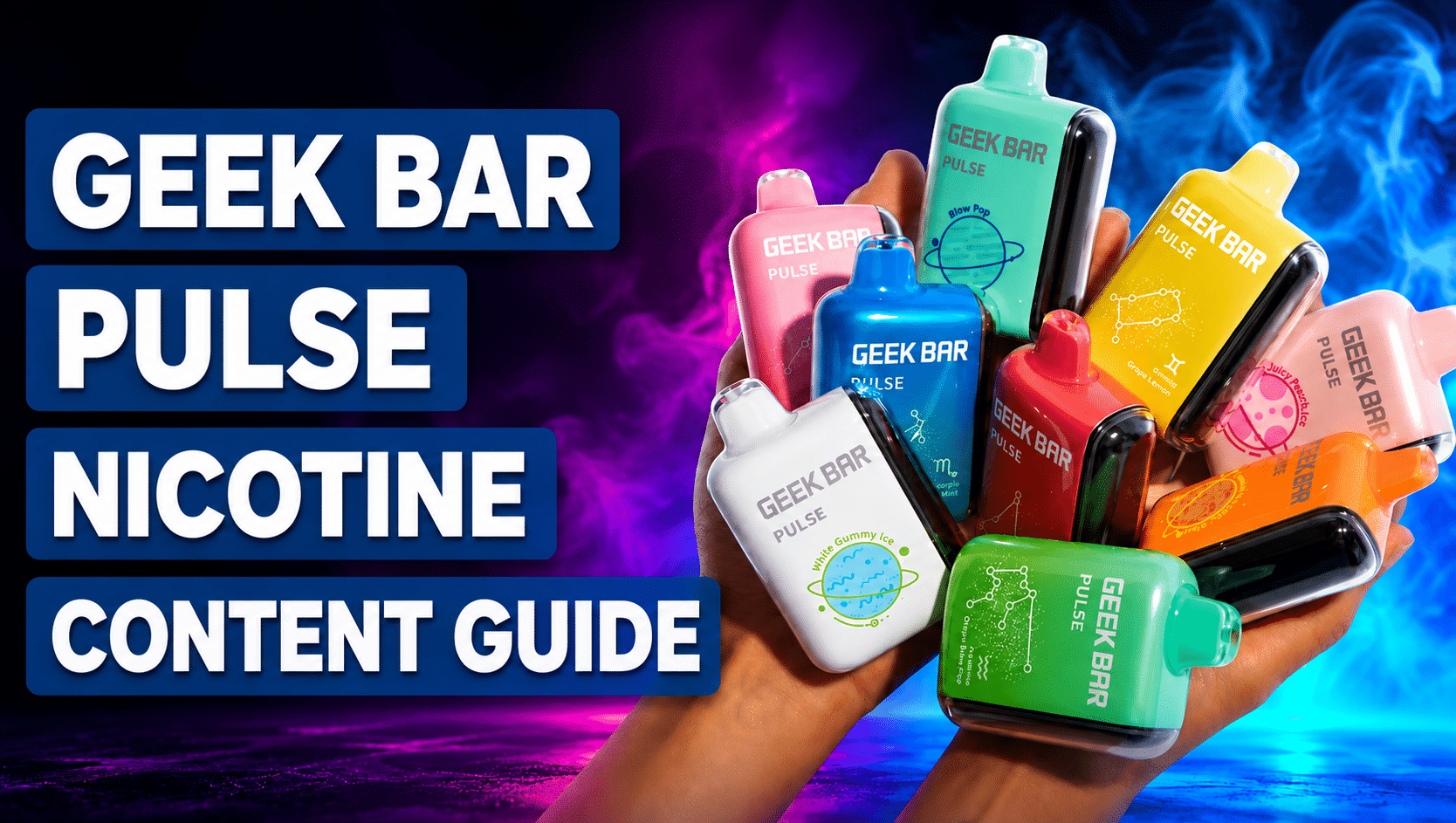
Understanding nicotine strength is important for anyone who wants to make informed decisions about vaping products. If you’re looking to buy geek bar pulse online, knowing these numbers first will help you pick the right strength for your needs. This guide explains how nicotine strength is measured, what puff counts really mean, why comparing disposable vapes to cigarettes is not always straightforward, and how to read a label like a more informed consumer.
Understanding Geek Bar Pulse Nicotine Strength
Nicotine strength is one of the most important specifications listed on a disposable vape. It tells users how much nicotine is present in the e-liquid and helps them understand the product’s intended use. However, nicotine content does not directly indicate how much nicotine a person will absorb, because vaping habits and device performance also play a significant role.
What Does mg Strength Mean?
Nicotine strength is commonly displayed as milligrams per milliliter (mg/mL). For example, a disposable vape labeled as 50 mg/mL contains approximately 50 milligrams of nicotine in each milliliter of e-liquid.
Many disposable vapes are also labeled using percentages.
- 20 mg/mL equals about 2% nicotine
- 50 mg/mL equals about 5% nicotine
- Different regions have different legal limits for nicotine strength
Knowing these values helps users compare products more accurately.
Why Nicotine Strength Matters
Choosing the appropriate nicotine strength depends on individual preferences and previous nicotine use. Higher strengths generally deliver more nicotine with each puff, while lower strengths provide a lighter experience.
It is also important to remember that nicotine delivery varies depending on:
- Puff duration
- Puff frequency
- Device power
- Coil efficiency
- Individual nicotine absorption
How Nicotine Strength Regulations Differ by Region
Nicotine strength limits are not universal, and this affects what’s available on store shelves.
- The European Union caps nicotine e-liquid at 20 mg/mL under the Tobacco Products Directive
- The United Kingdom follows a similar 20 mg/mL limit
- The United States does not impose a federal mg/mL cap, which is why higher-strength disposables (such as 50 mg/mL) are more commonly sold there
- Some countries restrict or ban disposable vapes entirely, regardless of nicotine strength
Because of this variation, a product sold under one name and strength in one country may not be available — or may be capped differently — elsewhere. Checking local regulations is worthwhile before purchasing.
How Many Puffs Does Geek Bar Pulse Offer?
Puff count is often highlighted on disposable vape packaging. It estimates the maximum number of puffs the device may provide under ideal testing conditions.
Actual puff counts differ from person to person because every user takes different length draws and uses the device differently throughout its lifespan.
Understanding Puff Estimates
Manufacturers calculate puff counts using standardized testing methods, typically based on a fixed puff duration and interval under laboratory conditions. In everyday use, factors that influence puff count include:
- Length of each inhale
- Frequency of vaping
- Battery performance
- Remaining e-liquid
- Device settings, when applicable
For this reason, the advertised puff count should be viewed as an estimate rather than a guarantee. Two users with the same device may reach the end of the e-liquid or battery life at very different total puff counts.
Does More Puffs Mean More Nicotine?
Not necessarily.
A device with more puffs simply contains more e-liquid or uses it more efficiently. The nicotine delivered in each puff depends on both the nicotine concentration and individual vaping style.
Therefore, users should consider both nicotine strength and total e-liquid capacity instead of relying only on puff numbers. A high puff count paired with a low nicotine strength can deliver less total nicotine over the life of the device than a lower puff count paired with a higher strength.
E-Liquid Capacity and Battery Size: The Other Two Numbers on the Box
Puff count is usually a function of two other specs worth checking:
- E-liquid capacity (mL): the total volume of nicotine-containing liquid in the device
- Battery capacity (mAh): larger batteries generally support more total vapor production before the device stops working, even if e-liquid remains
A device can run out of battery before the e-liquid is used up, or vice versa — either one effectively ends the device’s usable life.
How Does Geek Bar Pulse Compare to Cigarettes?
Many people search for cigarette equivalents when looking at disposable vapes. Although comparisons can provide a general idea, there is no exact conversion between cigarettes and vaping products.
Nicotine delivery differs because cigarettes burn tobacco, while disposable vapes create an aerosol without combustion.
Why Exact Comparisons Are Difficult
Several factors affect nicotine intake:
- Individual inhalation patterns
- Device efficiency
- Nicotine formulation
- User experience
- Frequency of use
As a result, two people using the same disposable vape may absorb different amounts of nicotine.
General Comparison Guidelines
Some online sources estimate cigarette equivalents based on total nicotine content and puff count. These estimates should only be viewed as rough references because real-world nicotine absorption varies considerably.
Health organizations recommend avoiding direct one-to-one comparisons because the two products deliver nicotine differently. A cigarette delivers a bolus of nicotine, tar, and combustion byproducts in a few minutes of smoking; a vape delivers nicotine in an aerosol across many shorter puffs spread over a longer period, without combustion. This makes minute-by-minute or puff-by-puff comparisons inherently imprecise.
Factors That Influence Nicotine Delivery
Even when two disposable vapes contain the same nicotine strength, users may experience different nicotine intake.
Several variables influence how much nicotine reaches the bloodstream during vaping.
Device Technology
Modern disposable devices often use mesh coils and improved airflow systems. These features may produce more consistent vapor, which can affect nicotine delivery.
Battery output also influences vapor production throughout the device’s lifespan. As batteries in disposable devices deplete, vapor production and perceived nicotine delivery can taper off even though e-liquid remains in the tank. Device quality can vary between sellers, so buying from reputable disposable vape stores helps ensure you’re getting a properly manufactured, authentic product rather than a counterfeit with inconsistent performance.
User Behavior
Personal habits have a significant impact on nicotine exposure.
Examples include:
- Taking longer puffs
- Using the device more frequently
- Chain vaping
- Waiting between puffs
- Daily usage patterns
Because of these differences, nicotine intake cannot be calculated solely from product specifications.
Understanding Nicotine Salts
Many disposable vapes use nicotine salts instead of traditional freebase nicotine.
Nicotine salts allow higher nicotine concentrations while maintaining a smoother inhalation experience. This formulation has become common in disposable vaping devices because it supports consistent nicotine delivery even at higher mg/mL strengths, where freebase nicotine would otherwise feel harsh on the throat.
However, nicotine salts still contain nicotine, which is an addictive substance. Absorption rate and perceived “hit” can differ from freebase e-liquids, but the underlying dependency risk is the same.
Common Misconceptions About Puff Count and Nicotine
Several myths continue to circulate regarding disposable vapes.
Myth 1: More Puffs Always Mean Stronger Nicotine
This is incorrect.
Puff count reflects how long the device may last, not necessarily the nicotine strength.
Myth 2: Every Puff Contains the Same Amount of Nicotine
The amount of nicotine delivered per puff varies depending on vaping technique, battery level, and device condition.
Myth 3: Cigarette Equivalents Are Exact
There is no scientific formula that converts disposable vape puffs directly into cigarettes for every individual.
These comparisons should always be treated as rough estimates rather than precise measurements.
Myth 4: A Lower mg/mL Strength Always Means Lower Total Nicotine Intake
Not necessarily. Someone using a lower-strength device more frequently, or taking longer and more frequent puffs, can end up absorbing more total nicotine than someone using a higher-strength device occasionally. Strength is only one variable in overall exposure.
Health Considerations
Nicotine is a highly addictive substance. While vaping eliminates tobacco combustion, it still exposes users to nicotine.
Public health organizations recommend that people who do not currently use nicotine should avoid starting.
Individuals who are pregnant, under the legal purchasing age in their country, or have certain medical conditions should consult healthcare professionals regarding nicotine use.
Understanding nicotine content allows consumers to make better informed decisions and interpret product labels more accurately.
Tips for Reading Disposable Vape Labels
Product labels often include several important specifications.
Look for:
- Nicotine strength
- E-liquid capacity
- Puff estimate
- Battery capacity
- Ingredient information
- Manufacturer details
- Safety warnings
Reading these details helps users better understand what each product offers without relying solely on marketing claims.
A Quick Label-Reading Checklist
- Confirm the mg/mL or percentage strength matches what you intend to use
- Check e-liquid capacity and battery capacity together, not separately, to estimate real-world lifespan
- Look for a batch or verification code, since counterfeit disposables are a known issue in the market
- Check for child-resistant packaging and clear warning labels
- Verify the product is legal for sale and use in your region
Conclusion
Understanding nicotine strength, puff count, and cigarette comparisons helps users interpret disposable vape specifications more accurately. While product labels provide useful information, actual nicotine intake depends on many personal and technical factors, including device technology, e-liquid capacity, battery performance, and individual vaping habits. Rather than relying on simple cigarette equivalents, it is better to consider nicotine strength, device design, regional regulations, and individual usage habits together. Making informed decisions begins with understanding how nicotine content is measured and what those numbers actually represent. If you still have questions about strength, puff counts, or which product fits your needs, contact us now and our team can help.
Frequently Asked Questions
What does 50 mg nicotine mean?
It means the e-liquid contains approximately 50 milligrams of nicotine per milliliter, which is commonly expressed as 5% nicotine strength.
Does puff count equal nicotine intake?
No. Puff count estimates how long a device may last. Actual nicotine intake depends on vaping behavior and device performance.
Is there an exact cigarette equivalent for Geek Bar Pulse?
No. There is no universally accepted conversion because nicotine absorption differs between smoking and vaping.
Why do two people experience different nicotine effects?
Factors such as inhalation style, vaping frequency, device efficiency, and individual physiology all influence nicotine absorption.
Are nicotine salts different from regular nicotine?
Nicotine salts are a different formulation that allows higher nicotine strengths while providing a smoother vaping experience, but they remain addictive.
Does nicotine strength affect how long a disposable lasts?
Not directly. Strength (mg/mL) is about concentration, not volume. A device’s lifespan is driven more by its e-liquid capacity and battery size than by how concentrated the nicotine is.
Can nicotine strength change how harsh a vape feels?
Yes. Higher freebase nicotine concentrations tend to feel harsher on the throat, which is part of why nicotine salt formulations are common in higher-strength disposables — they’re designed to feel smoother at strengths that would otherwise be uncomfortable.